Making Product Value Visible
How aligning stakeholder priorities drove clarity, engagement, and retention
Case Study Snapshot
Project Overview
Role: Completion lead, stakeholder alignment, UI design
Timeline: 1-week turnaround
Goal: Communicate value (time/money saved, revenue generated)
Challenge: Conflicting stakeholder feedback just before handoff
Outcome: 20% interaction rate + reduced churn
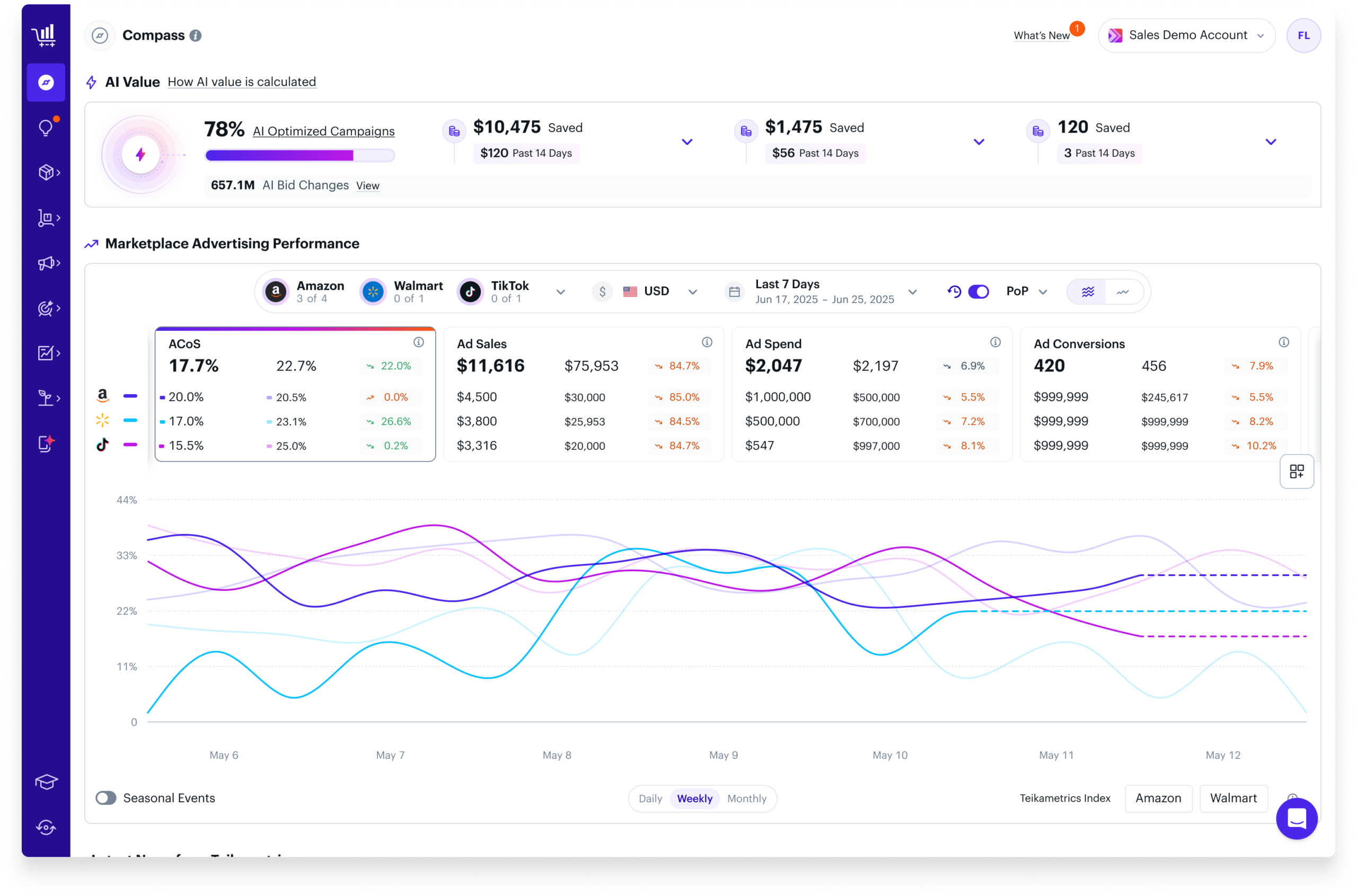
I joined a late-stage project to deliver a high-visibility product section showcasing the time, cost savings, and revenue impact of our platform. Just before handoff, conflicting stakeholder feedback threatened scope, clarity, and timeline. I facilitated alignment, reframed the problem, and designed a scalable solution that balanced trust, clarity, and action. The feature shipped within one week and drove strong engagement, with 20% of users interacting with the section and a measurable reduction in churn.
The Challenge
When I joined the project, the feature was already in progress and scheduled for near-term delivery. The goal was to introduce a new section that demonstrated the tangible value customers were receiving from the platform through metrics like time saved, cost savings, and revenue generated.
What initially seemed like a straightforward UI polish quickly evolved into a product strategy challenge when final stakeholder reviews surfaced conflicting priorities.
Competing Stakeholder Perspectives
- One stakeholder felt the metrics lacked credibility without full transparency and pushed for a new, detailed dashboard explaining how the numbers were calculated
- The PM prioritized speed and focus, advocating for a lightweight P0 that did not expand scope
- The CEO agreed with keeping scope tight, but felt the existing design did not communicate impact strongly enough
This created tension between:
- Trust vs simplicity
- Depth vs speed
- Inspiration vs explanation
All with a one-week deadline before development handoff.
Reframing the Problem
Instead of treating the feedback as competing feature requests, I reframed the core challenge as:
How might we make our impact metrics feel both credible and compelling, while keeping the experience lightweight enough to ship immediately?
This reframing shifted the conversation from what to add to what user need we were solving:
Users needed to believe the numbers, understand what drove them, and see a path to increasing their own results.
Driving Stakeholder Alignment
To break the deadlock, I facilitated a working stakeholder session where I translated each concern into a design requirement:
| Stakeholder Concern | Design Principle |
| “Users won’t trust these numbers” | Provide visible methodology and breakdown |
| “We can’t build a full dashboard right now” | Keep the default view simple and lightweight |
| “This doesn’t feel impactful enough” | Strengthen value framing and outcome visibility |
During the session, I began sketching wireframes live to make tradeoffs tangible and keep the conversation grounded in user experience rather than abstract preferences.
This helped the group quickly align on a direction that addressed all priorities without expanding scope beyond the timeline.
The Solution
I designed an expandable metric module that balanced clarity, credibility, and actionability.
Key Elements
1. Immediate Value at a Glance
Each metric clearly highlighted outcomes like time saved, cost savings, or revenue generated to quickly communicate impact.
2. On-Demand Transparency
A dropdown next to each metric allowed users to expand and see:
- How the number was calculated
- Which platform features contributed to it
- This addressed concerns about trust without requiring a separate dashboard build.
3. Action-Oriented Path Forward
Within each expanded view, users could navigate directly to underutilized features that could help increase their results, turning passive metrics into behavior-driving guidance.
This transformed the section from a static proof point into a motivational and educational tool.
Designing Under a Tight Deadline
With only one week before development handoff, speed and clarity were critical.
To keep momentum:
I designed at wireframe fidelity first to enable rapid stakeholder feedback
I collaborated closely with engineering to ensure the expandable pattern was technically feasible within the timeline
I focused on scalable components so future iterations (like a full dashboard) could build on this foundation
Because alignment happened before handoff, we avoided late-stage rework and delivered on schedule.
Outcomes & Impact
After launch, the feature demonstrated strong engagement and meaningful business impact:
- 20% of users who viewed the page interacted with the new section
- Users explored breakdowns and navigated to related features, increasing visibility of underutilized functionality
- We observed a reduction in churn following the release, suggesting that reinforcing product value contributed to improved retention
Beyond metrics, this work also:
- Established a shared framework for balancing transparency and simplicity in future features
- Created a scalable foundation for deeper value reporting later on
Reflection
This project reinforced that stakeholder conflict often signals an undefined product question rather than incompatible opinions. By translating feedback into underlying user needs and visualizing tradeoffs in real time, I was able to guide the team toward a solution that satisfied leadership, respected constraints, and delivered real user value.